 Putting Tribal Sovereignty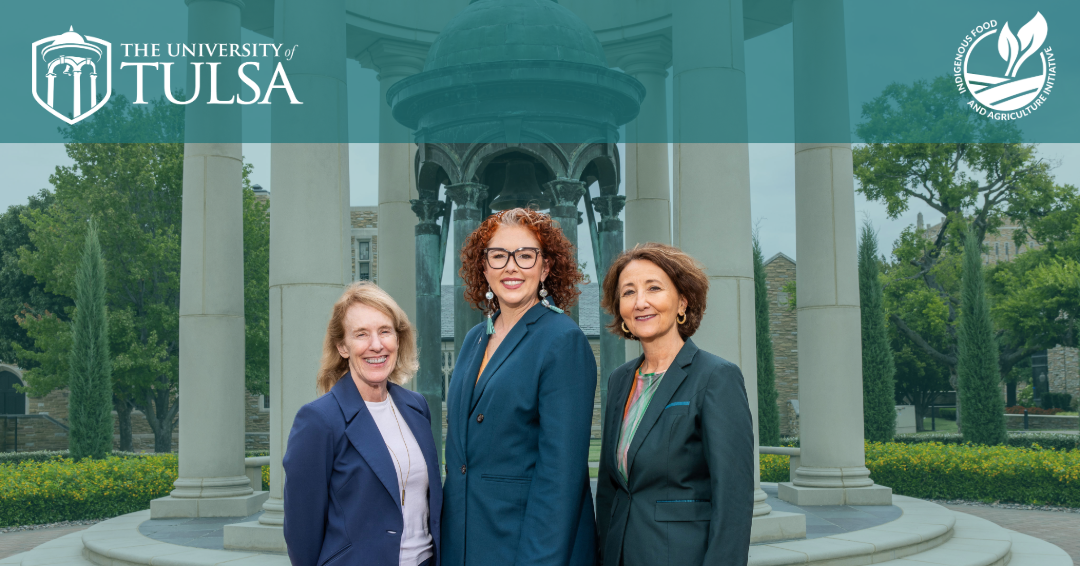
TULSA, OK. – The Indigenous Food and Agriculture Initiative (IFAI), a national leader in Tribal food and agriculture law and policy, has joined The University of Tulsa’s College of Law.
Since its founding in 2013, IFAI has worked alongside Tribal governments, producers and food businesses to advance Tribally driven solutions in food and agriculture. The organization provides educational resources, technical assistance, policy research, strategic legal analysis, food safety training and economic development support tailored to the unique needs of Indigenous communities.
At the center of IFAI’s work is the understanding that Tribal sovereignty and food sovereignty are deeply connected. Through legal and policy expertise, the organization helps Tribal nations navigate complex agricultural policies, develop food and agriculture infrastructure, expand market opportunities and strengthen traditional food systems.
The move to The University of Tulsa places IFAI at the only law school and at the only research university located on an Indigenous nation reservation. The University of Tulsa campus is within the Muscogee (Creek) Nation, and UTulsa’s North Campus is within the Cherokee Nation.
The move creates new opportunities to connect students with issues at the intersection of law, sovereignty, food systems and economic development.
“IFAI is pleased to accept the invitation to join The University of Tulsa’s College of Law,” said Executive Director Carly Griffith Hotvedt. “Being a part of the only law school on a Tribal reservation aligns well with IFAI’s mission. This move allows us to lend our subject matter expertise in Indian Country food and agriculture law and policy matters to the law school for the benefit of students and the broader community.”
University of Tulsa President Stacy Leeds (J.D. ’97) who co-founded IFAI in 2012 while serving as dean of the University of Arkansas’ School of Law, said the organization’s mission aligns closely with the strengths of UTulsa Law and the university’s commitment to serving Indigenous communities.
“Having been part of IFAI’s founding, it is especially meaningful to welcome the organization to Tulsa,” Leeds said. “IFAI has become a nationally respected leader in Tribal food and agriculture law and policy, and its mission aligns with the strengths of UTulsa Law. The partnership creates valuable opportunities for our students while further strengthening our engagement with Tribal nations, and I appreciate Carly’s expertise and leadership in moving IFAI forward in new and innovate ways.”
In addition to its legal and policy work, IFAI invests in the next generation of tribal citizen agricultural leaders through youth programming, leadership development and educational opportunities. Recent initiatives include the Tribal Governance Guide to Food and Agriculture, a resource designed to help Tribal governments strengthen food and agricultural systems within their communities.
“We are thrilled to welcome IFAI to the College of Law,” Interim Dean Lyn Entzeroth said. “Its work reflects the kind of interdisciplinary, solution-oriented approach we want our students to see firsthand. IFAI’s presence will connect our students to important conversations about law, policy and community development while strengthening the experiential opportunities available at UTulsa Law.”
Hotvedt said IFAI will continue serving Tribal stakeholders across Indian Country while maintaining ties to the University of Arkansas.
“I am particularly enthusiastic about being under the leadership of President Stacy Leeds, who was one of IFAI’s founders as dean of the University of Arkansas’ College of Law,” Hotvedt said. “We appreciate our time and tenure at the University of Arkansas and those in Fayetteville who championed our work. IFAI will maintain a relationship with the Food and Agriculture Law L.L.M. program at the University of Arkansas. We will continue to serve Tribal stakeholders nationwide and look forward to the next phase of our work in Indian Country.”
To learn more about IFAI and its work, visit indigenousfoodandag.com